
How to make self-raising flour from plain (or all-purpose) flour and baking powder.
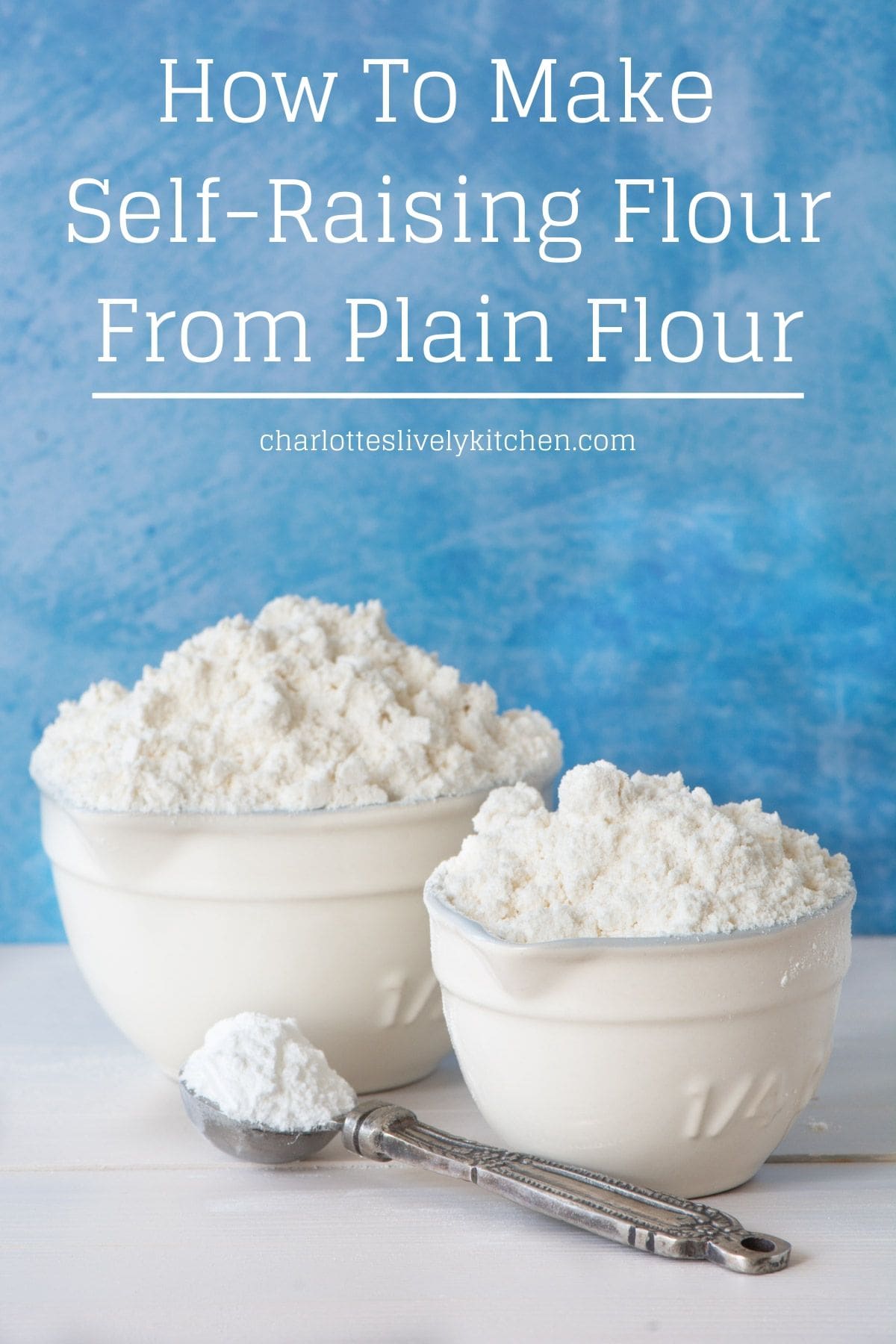
I use self-raising flour in a lot in my recipes and one question I get asked quite regularly is how they can be adapted to be made from plain or all-purpose flour with added baking powder.
There are lots websites and books about which suggest the correct quantity of baking powder to add to plain to turn it into self-raising, but annoyingly they don’t all agree.
Nigella suggests adding ½ tsp of baking powder and ½ tsp of bicarbonate of soda to 150g of plain flour, whereas Baking Mad suggests adding 2 tsp of baking powder to 150g of flour. Then King Arthur Flour proposes adding 1½ tsp of baking powder and ¼ tsp of salt to 120g of flour. As you can see the suggestions aren’t even close!
So how how on earth do we know how much baking powder is needed to make self-raising flour?
My solution (the same as always)… to get into the kitchen and get baking.
The experiment
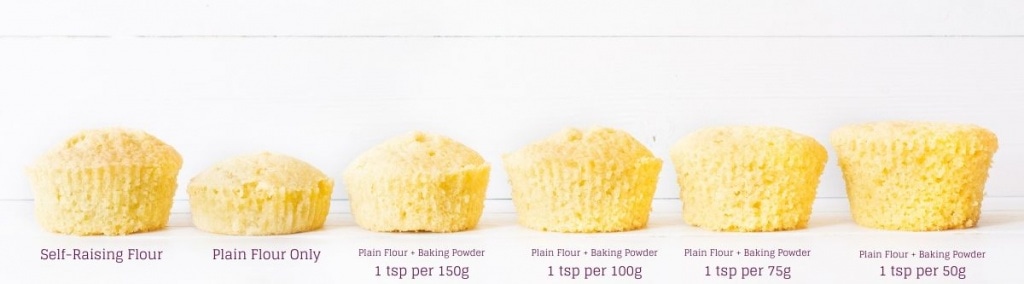
I decided to make lots of simple vanilla cupcakes, one batch using self-raising flour and then all the others made with plain flour and subtly different amounts of baking powder.
NOTE – The vanilla cupcake recipe I used for these experiments is ever so slightly different from the recipe linked above, as in that recipe I add extra baking powder. For this experiment I decided to leave that out as I felt it gave a cleaner comparison.
The results
As expected, the more baking powder that’s used the greater the rise.
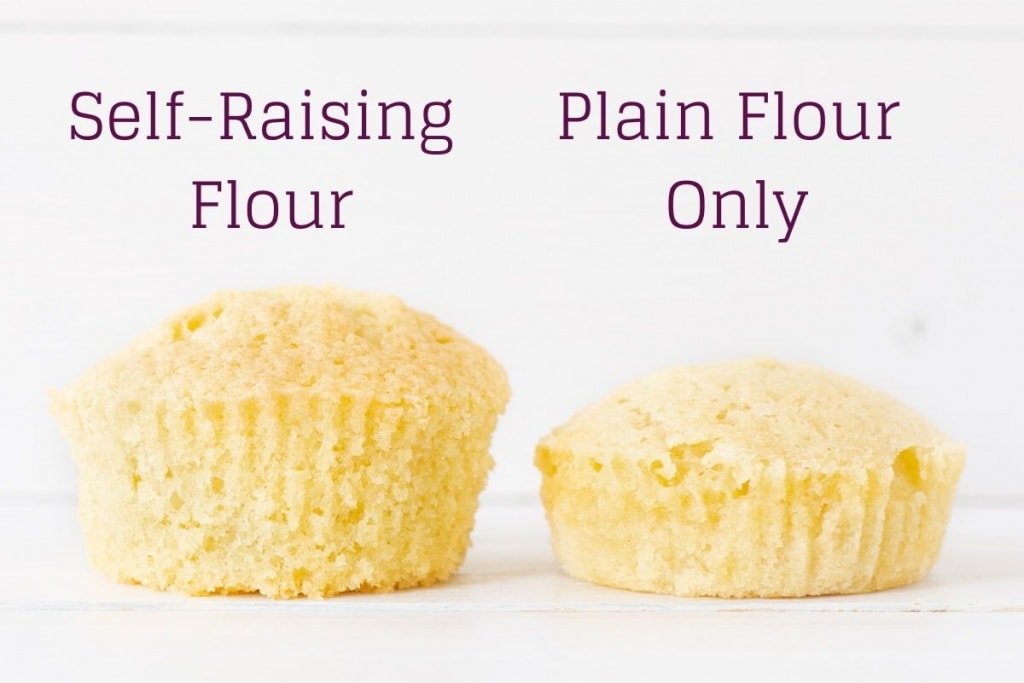
You can see the cupcake made with just plain flour is much shorter than the others. Also, as it baked a lot of the fat bubbled out leaving it dry and dense. If you ever have a cake that doesn’t rise as expected, it would suggest that your baking powder isn’t working properly (or you’ve use bicarbonate of soda instead – something I’ll be writing a post about soon).
If you want to check your baking powder you can add a little to some boiling water. If it bubbles (the bubbling will be quite furious), you can get baking. If not, it’s time to get to the shops for a fresh packet.
Going to the other end of the scale, when you compare the cupcake made with self-raising flour to the cupcake made with 1 tsp of baking powder per 50g of plain flour, you can see that the plain flour cupcake is taller (especially at the sides) and flatter on top. I like a tall flat cupcake which is why I often add additional baking powder to my recipes when using self-raising flour.
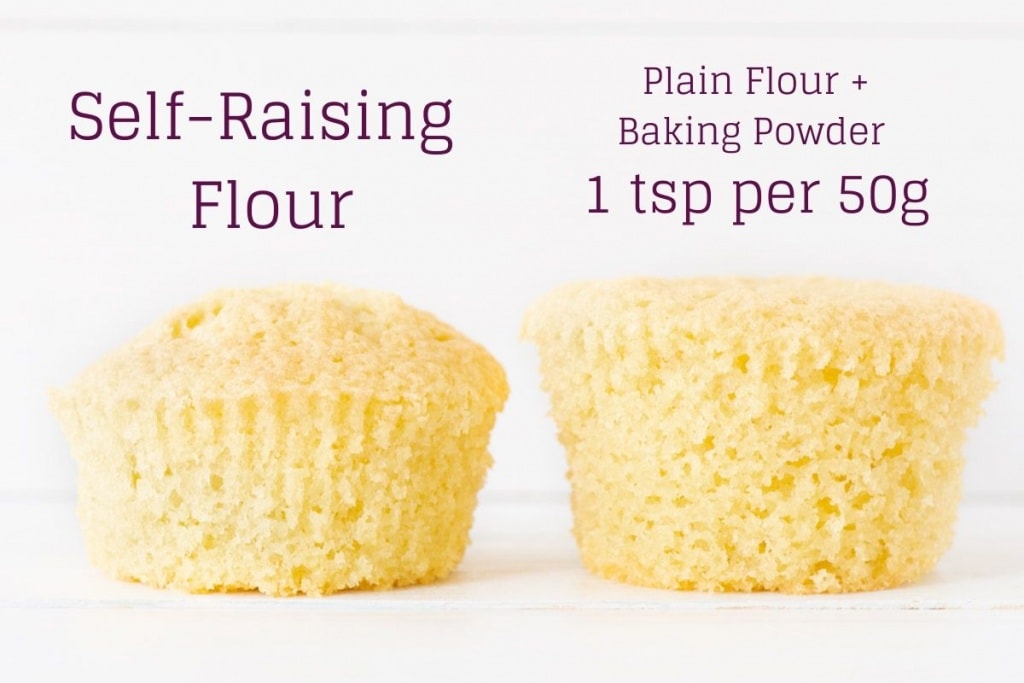
So, much like in goldilocks and the three bears we have one cupcake that’s too small and one cupcake that’s too big and fluffy. All we need now is a cupcake that’s just right…
How much baking powder should be added to plain flour to make self-raising flour?
The answer is 1 tsp of baking powder per 100g of plain flour.
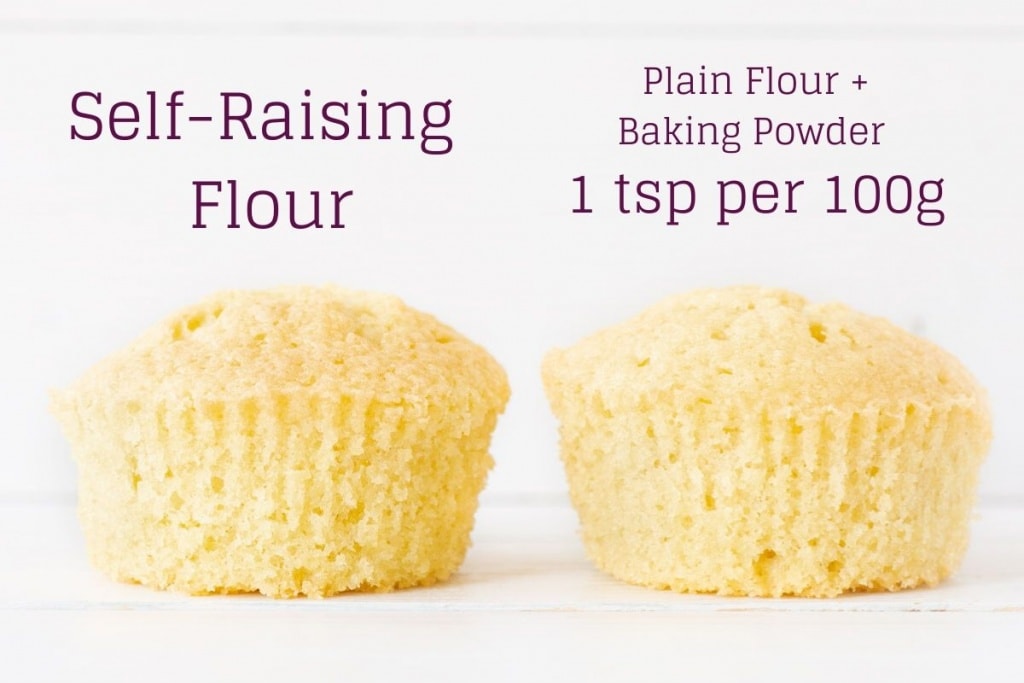
You can see that the cupcakes are not only nearly identical in terms of height, they’ve also got a very similar dome on top.
Is that a heaped teaspoon or a level teaspoon?
Always a level teaspoon (much more accurate as some teaspoons will hold a bigger heap than others depending on their shape).
Also, I always use a measuring teaspoon rather than one I’d use to make a cup of tea as again it’s much more accurate.
Is self-raising flour in the UK the same as self-rising flour in the US?
Unfortunately not, so if you find a recipe that calls for one of these and you’re not in the right country then I’d suggest using a homemade version.
The version I’ve shared here is for UK self-raising flour (as that’s what I use and what I can get hold of in the shops for my testing). US self-rising flour has a lower amount of baking powder and also contains added salt.
How To Make Self-Raising Flour
INGREDIENTS
- 100 g plain or all-purpose flour
- 1 level tsp baking powder - I always use a measuring teaspoon rather than one I'd use to make a cup of tea as it's much more accurate.
INSTRUCTIONS
- Put your ingredients (100g plain flour, 1 tsp baking powder) into a large bowl.
- Mix together (I like to use a whisk) until the baking powder is evenly distributed in the flour.
- Your self-raising flour is now ready to use in your chosen recipe.
NOTES
NUTRITIONAL INFORMATION
Any nutritional information provided is the estimated nutritional information per serving. Please refer to my guide to Charlotte’s Lively Kitchen nutritional information if you would like to learn more about how this is calculated.
Janu senthil says
Thank u so much for your concern towards us. I don’t get cake flour in my place. Can u help me out in making it at home?
Charlotte Oates says
Unfortunately I don’t have access to cake flour where I live either, so I’m unable to do the tests necessary to make sure I have a good equivalent.
Deborah says
Hello, can you give the number of grams of baking powder per 100 grams of flour? Thanks!
Charlotte Oates says
Unfortunately not as my scales only weigh to the nearest gram which wouldn’t be accurate enough – sorry.
Ju says
I just have this conversion a try. My 1 tsp yields 4grams.
Martin Price says
This is a truly scientific approach and actually answers all the questions I could have asked.
Brilliant.
James Porritt says
Any chance you could weigh your level teaspoon of baking powder on an accurate scale? Would be good to have a proper weighable ratio.
Charlotte Oates says
Unfortunately my scales only round to the nearest gram so it wouldn’t be that accurate for such a small measurement. However, I’ll give you what I’ve got. On my scales 1 tsp = 5g.
Magene says
Thank you so much for posting this – and your scientific experiments 🙂
I’m in the UK so normally don’t have a problem getting SR flour but I was down to just 100g and about 3kg of plain!
I’ve made carrot cupcakes and mincemeat muffins and they turned out brilliant, in fact I think better than when I used SR flour.
Once again, many thanks.
Maureen says
Thanks a billion for your generosity in sharing this beautiful recipe. Be blessed for your kindness. Love you
Mel says
Hi Charlotte
I’ve just found a bag of Self Raising flour in the cupboard, its best before is 3 months ago, would this recipe work for the old flour?
Charlotte Oates says
It’s difficult to say. I’d say plain flour 3 months out of date would be fine (as long as it looks OK), but the raising agent in self-raising flour can become less effective over time so you may find your cakes (or whatever you’re baking) don’t rise as expected. Unfortunately, unlike baking powder, there’s no easy test to see if it’s still effective.
Sue Jones says
Thank you for making this the ultimate, go-to answer on the subject. Loved the photos of all your painstaking experiments with the cup cakes too, visuals are the best teaching aids for me.
Jess says
I’m from the US and getting in to the baking game since starting to watch the Great British Baking Show. I haven’t made much yet (as I’m trying to research before hand) due to these flour issues. I’m attempting to make Mary Berry’s lemon drizzle tray bake (of which I’m doing in muffin tins). My question for you is this…in your ratio of 1tsp to 100gm of plain flour…do you mean U.K. flour? Or US flour? From my research U.K. plain flour has less protein and the only thing that would come close in the US would be cake or pastry flour. I was able to scrounge up some cake flour from Swans Down and I’m hoping your ratio of 1tsp per 100gm of flour works out. In the Basic Tin Loaf from Paul Hollywood’s book turned out very dense and hard to knead…but I think it may have had to do with my US plain white flour being more absorbent compared to the UK plain flour. Sigh. Hence I’m here asking so I don’t have a multitude of creations fail bc I’m not aligning the correct ingredients/ratios. Thanks for sharing your experiments!
Charlotte Oates says
I did all of my testing with UK plain flour.
joy Albania says
I will try it because I have so many plain flour (bulk buying from Costco) and I need self raising flour for chocolate brownies. Thanks
Cheryll Lewis says
Thanks, was searching to find a recipe, we do get selfraising flour in my country, but the taste is awful, I wanted to make my own.
Charlotte Oates says
Self-raising flour can very from country to country. This is the UK version (the US one has a different amount of raising agent and also includes salt). I’d guess there are also different versions in other countries too. I’d guess you were using a version from one country with a recipe from another which is probably why the taste was so bad.
I hope this helps you 🙂
Ellen Macinnes says
Thank you. I have been struggling to find self raising flour but have plenty of plain. You have made my day.
Zelda says
Brilliant – thank you! I’m an expat in Switzerland, where self-rising flour is completely unavailable and seemingly unheard of. I especially appreciate your highlighting the difference between US and UK self-rising flours, so I’ll now feel more confident when using my homemade version in various recipes.
colin pearce says
Brilliant information, Charlotte; thank you.
luis says
Nice !
Thanks
Nic | Nic's Adventures & Bakes says
Thanks for sharing, it will prove useful if I can’t get self-raising flour in the future 🙂
Elaine says
Daft question I know but is the teaspoon of baking powder used heaped or levelled? It’s a good to know recipe though! Thanks
Charlotte Oates says
Not a daft question at all (I should have specified, I’ll update the post).
It should be level and you should use measuring a teaspoon rather than one you’d use to make a cup of tea, as that’ll be a lot more accurate.
Wendy says
Hi Charlotte,
Many thanks for the info. Only last week I tried to make some scones with plain flour as ( like you said ) at the moment, will find gold in the garden quicker than finding self raising flour in shops. Anyway, they turned out like rock cakes and didn’t grow…. didn’t look anything like a scone.
What is puzzling me however is ……in one of the pictures you state :- 1 teasp. per 50 grams of plain flour then underneath it states :- 1 teasp. per 100 grams of plain flour
Can you explain please.
I do look forward to hearing from you.
Charlotte Oates says
The 1 tsp per 50g was for one of the tests I completed (in which the cupcake rose too tall, so too much baking powder). The cupcake which had the same rise as self-raising flour had 1 tsp per 100g of flour, which is what I recommend using.
Grace says
Charlotte you are amazing! Love how you did all the experimenting and shared the results visually, I’ve learnt so much about baking from your blog! Bookmarking this post for definite future use!
Terry Wood says
This is a lifesaver as trying to get self raising flower is like looking for gold.